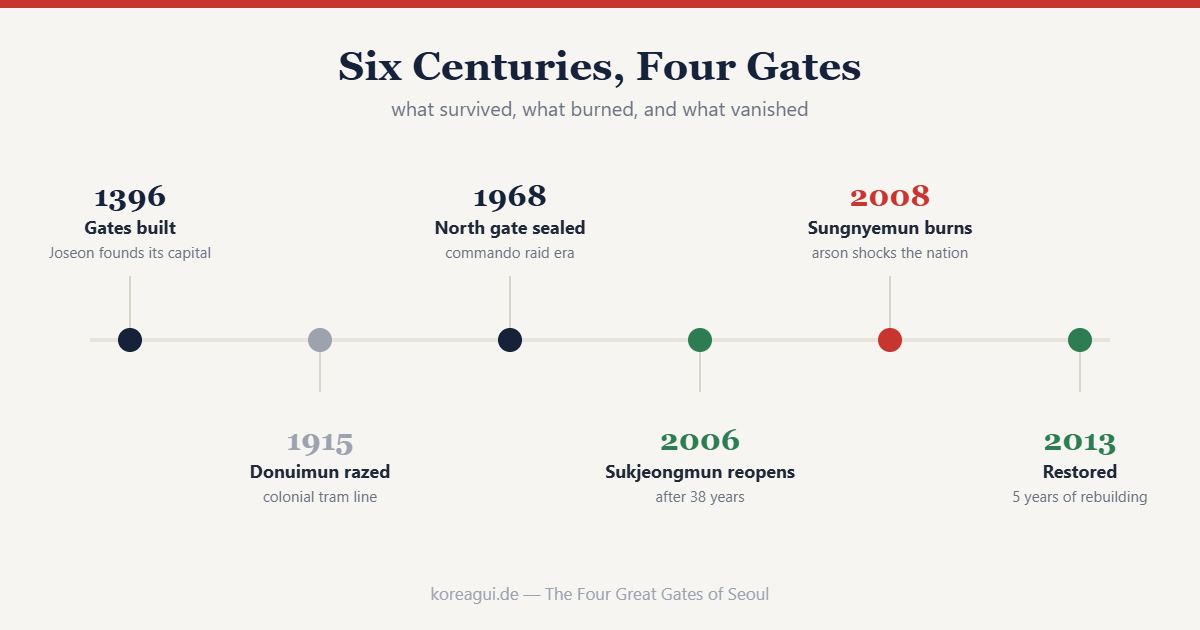
Here’s a secret hiding in plain sight: Seoul’s old gates aren’t just pretty landmarks — they’re a 600-year-old message, written in architecture. When the Joseon Dynasty built its capital in 1396, it wrapped the city in an 18-kilometer fortress wall with four great gates, and named each one after a Confucian virtue. Walk the gates and you’re literally reading the values the kingdom wanted to live by. And the stories attached to them — a national treasure burned by an arsonist, a gate that vanished under colonial rule, a “missing” north gate sealed for 38 years — are better than most museum exhibits.
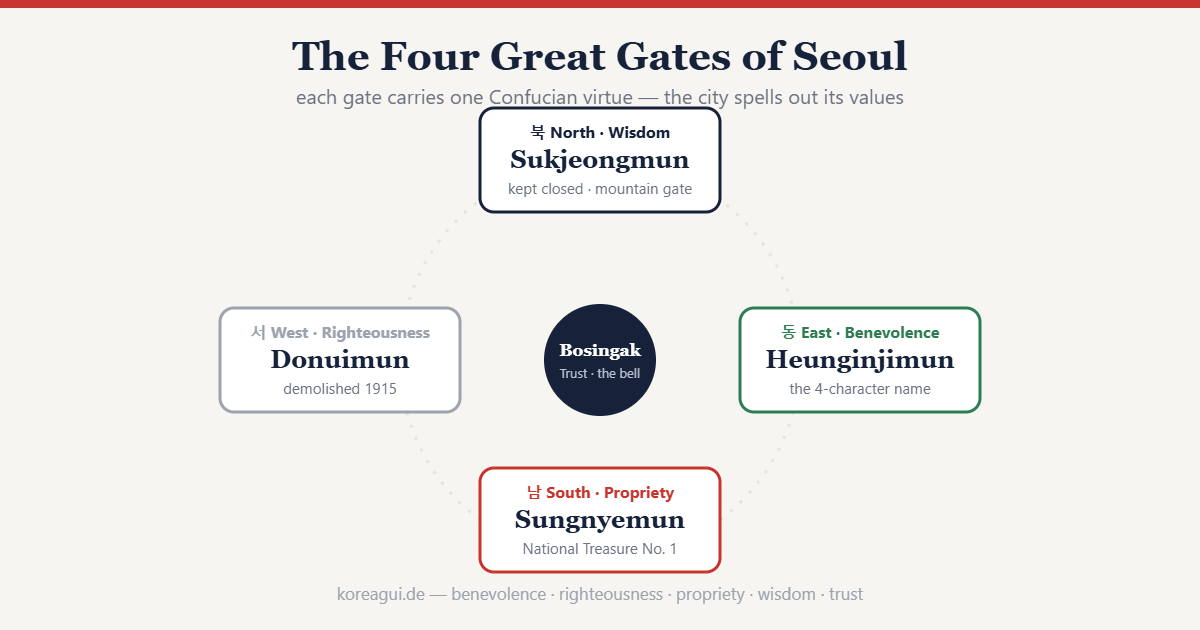
The city that spells out its values
Confucianism teaches five constant virtues: benevolence (인), righteousness (의), propriety (예), wisdom (지), and trust (신). Seoul’s planners assigned one to each direction: benevolence to the East Gate, righteousness to the West, propriety to the South, wisdom to the North — and trust to Bosingak, the bell pavilion at the city’s center whose bell opened and closed the gates each day. The same bell site still rings in every new year at midnight on December 31. So the next time someone tells you Seoul is all skyscrapers and K-pop, point out that the city map itself is a moral philosophy lecture.
South: Sungnyemun, the gate everyone calls Namdaemun
Official name: Sungnyemun (숭례문), “Gate of Exalted Propriety.” Everyday name: Namdaemun, which just means “big south gate” — Koreans have always used the plain directional nicknames, which is why the famous market next door is Namdaemun Market, not Sungnyemun Market. This is Korea’s National Treasure No. 1, and it comes with a feng shui twist: its name plaque hangs vertically, unlike every other gate. The reason? Gwanak Mountain south of the city was believed to radiate fire energy, and the vertical plaque was meant to stand like a flame blocking flame.
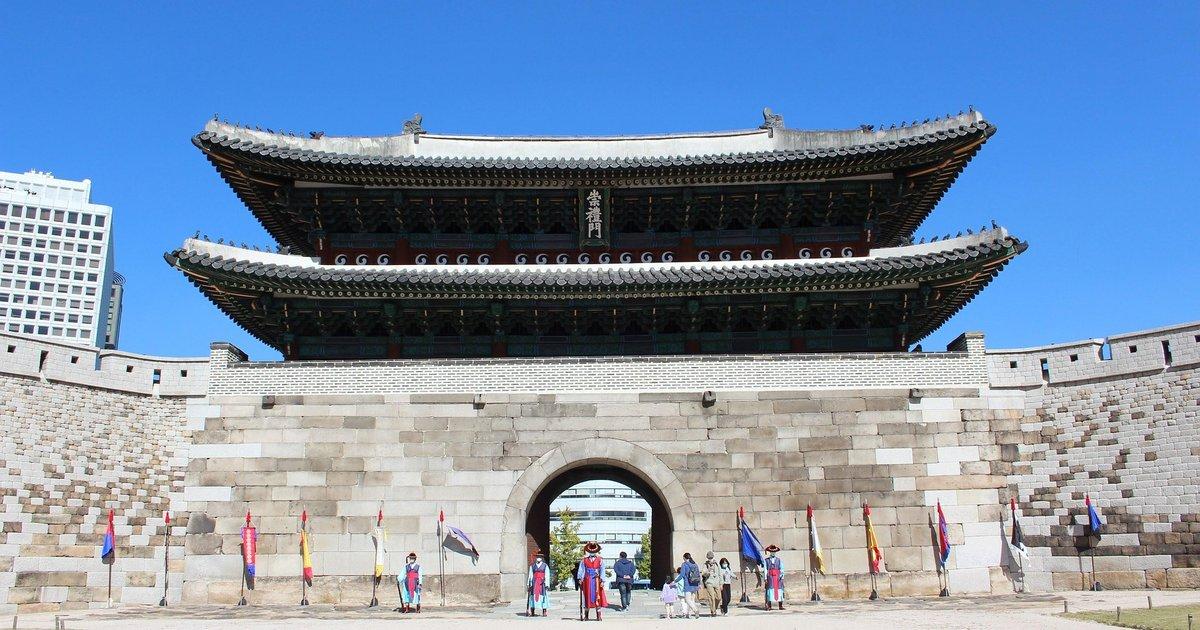
The irony is painful. In February 2008, a 69-year-old man with a grudge over a land dispute climbed the gate at night and set it on fire. The nation watched live as the 600-year-old wooden pavilion collapsed. The restoration took five years, using traditional tools, traditional pigments, and timber donated from across the country; the gate reopened in 2013. Visit today and you’re looking at a seamless blend of original stone and painstaking reconstruction — and at the reason every major Korean landmark now has fire sensors and night guards.
East: Heunginjimun, the gate with an extra letter
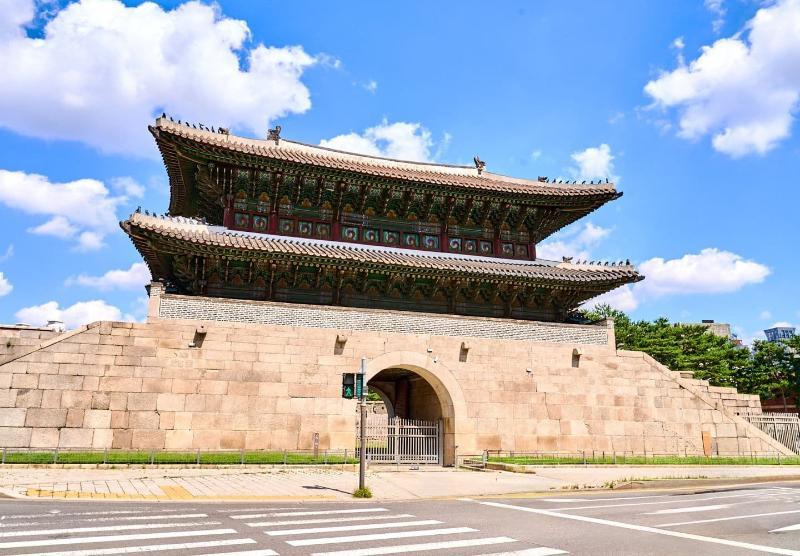
Heunginjimun (흥인지문) — Dongdaemun to everyone — guards the east with benevolence. Look closely at the name: every other gate has a three-character name, but the East Gate got four. The land east of the city was considered geomantically weak and low, so an extra character (지, “之”) was slipped into the name to prop up the feeble earth energy — a typo-sized feng shui patch, written in stone. For the same reason it’s the only great gate with a crescent-shaped outer wall (옹성) shielding its entrance. Today it sits in the middle of the Dongdaemun fashion district, a 14th-century fortress gate photobombed by the spaceship curves of Dongdaemun Design Plaza — the single best one-frame summary of Seoul I know.
West: the great gate that no longer exists
Ask a taxi to take you to Seodaemun and you’ll get to a district, a subway station, even a museum — everything except the gate itself. Donuimun (돈의문), “Gate of Amplified Righteousness,” was demolished by the Japanese colonial government in 1915 to make way for tram tracks, and unlike its siblings it was never rebuilt. It survives only as a name on the map — Seoul’s phantom limb.
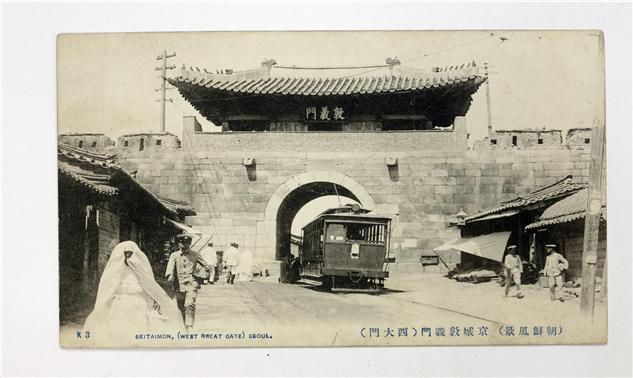
What stands in the West Gate’s old neighborhood instead is heavier history: Seodaemun Prison, built in 1908 on the eve of Japan’s annexation of Korea, where thousands of independence activists were imprisoned, tortured, and executed. It’s now the Seodaemun Prison History Hall, preserved cell blocks and all. It is not a fun visit, and that’s the point — it’s the most honest hour you can spend understanding modern Korea, and foreign visitors consistently rank it among the most affecting places in Seoul. Pair it with the adjacent Independence Gate (Dongnimmun), and you’ve read a century of Korean history in one city block.
North: the gate that “doesn’t exist” — until you hike to it
Visitors sometimes hear there’s no North Gate. There is — it’s just hiding. Sukjeongmun (숙정문) sits high on Bugaksan mountain behind the presidential compound, and it spent most of its life closed on purpose: Joseon’s geomancers held that keeping the north gate open would let too much yin energy pour into the capital, so it stayed shut except during droughts, when officials opened it to invite the rain-bringing yin in. Then history added a harder lock: after North Korean commandos slipped over Bugaksan in a 1968 raid on the presidential Blue House, the whole mountain became a restricted military zone. The gate only reopened to the public in 2006 — 38 years later — and soldiers still man posts along the trail.
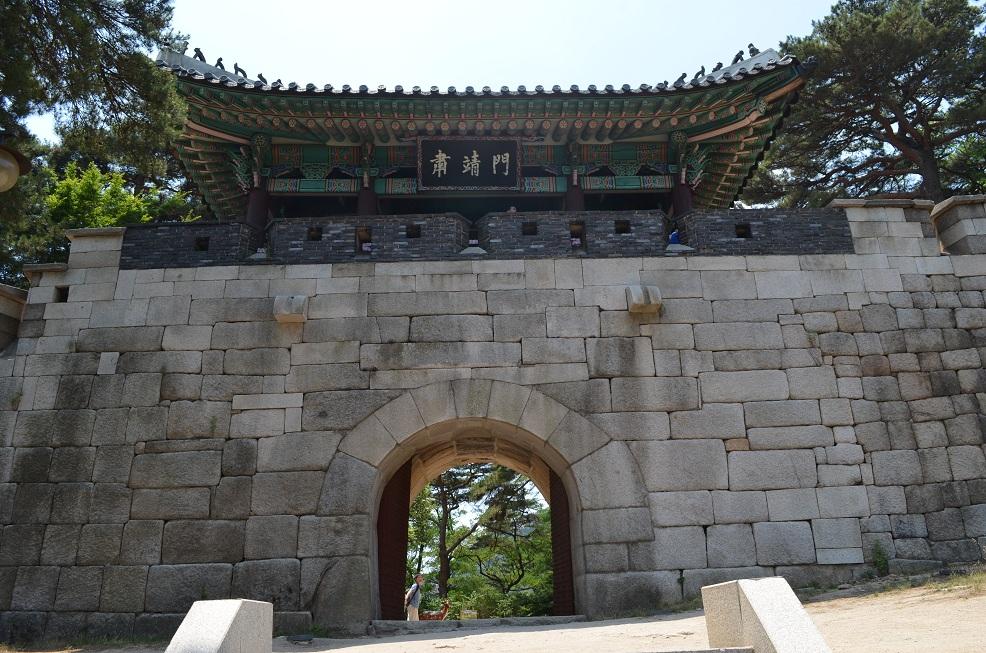
Reaching it today means walking the Hanyangdoseong (Seoul City Wall) trail — bring your passport-free self and good shoes; the Bugaksan section is the steepest and most atmospheric stretch of the whole wall, and it passes right above the Seongbuk-dong neighborhood I’ve written about before. Doing the hanok lanes, the wall, and the secret north gate in one day is a genuinely great itinerary no tour bus offers.
Visiting the gates today
| Gate | What you’ll find | Nearest station |
|---|---|---|
| Sungnyemun (South) | Restored gate, free to walk around; Namdaemun Market next door | Hoehyeon (Line 4) or Seoul Station |
| Heunginjimun (East) | Original gate + outer wall; DDP and fashion malls around it | Dongdaemun (Lines 1/4) |
| Donuimun site (West) | No gate — Seodaemun Prison History Hall and Independence Gate nearby | Dongnimmun (Line 3) |
| Sukjeongmun (North) | Mountain gate on the City Wall trail; bring ID for some trail sections | Hansung Univ. (Line 4), then bus/hike |
All four sites are free. If you’re building a first Seoul itinerary, the East and South gates slot naturally into a 2–3 day route, while the prison and the north gate reward a dedicated half day each — more context for first-time visitors in our first-timer’s guide.
FAQ
Can you go inside the gates?
Generally no — you view them from outside. Sungnyemun occasionally opens its central passage during daytime hours.
Which one is most worth seeing?
For ease, Heunginjimun (it’s in the middle of a district you’d visit anyway). For meaning, the Seodaemun Prison site. For adventure, the hike to Sukjeongmun.
Why do Koreans say Namdaemun instead of Sungnyemun?
Same reason New Yorkers say “the Brooklyn Bridge” and not its dedication name — the everyday directional nickname stuck centuries ago. Signs and official documents use the formal names; everyone else uses the compass.
Written by a Seoul local who crosses the old city wall line twice a day. Last checked: October 2026.